The contemporary commercial landscape relies heavily on distributed project teams. Multi-city executive rotations and structured client engagements span dense metropolitan corridors. Because of this structural interdependence, the environmental control of professional accommodation spaces has evolved. When enterprises approach lodging selection through a legacy lens, they overlook the profound impact of ambient decibel levels. Consequently, unmanaged decibel levels degrade professional rest and cognitive recovery. In today’s dynamic macroeconomic climate, mastering how to manage corporate hotels noise issues directly influences executive retention and enterprise resilience.
Transforming Acoustic Governance Workflows
Achieving structural mastery in acoustic governance requires a deliberate pivot. Organizations must move from reactive room changes toward a proactive, systemic framework. Travel directors and operational controllers must view acoustic property vetting as a vital operational node. This approach involves balancing urban street-level decibel mapping, property-level acoustic insulation standards, and HVAC engineering reliability. By harmonizing these elements, organizations construct programs that act as strategic shields against chronic sleep disruption.
Furthermore, this article delivers a rigorous examination of institutional lodging strategies. It focuses specifically on how enterprises design, implement, and evaluate methodologies required to understand how to manage corporate hotels noise issues across commercial markets. Moreover, we bypass superficial travel-blog tropes to explore architectural sound transmission class ratings and decibel mitigation protocols. Therefore, our objective is to establish a definitive reference point for long-term organizational success.
Understanding how to manage corporate hotels noise issues
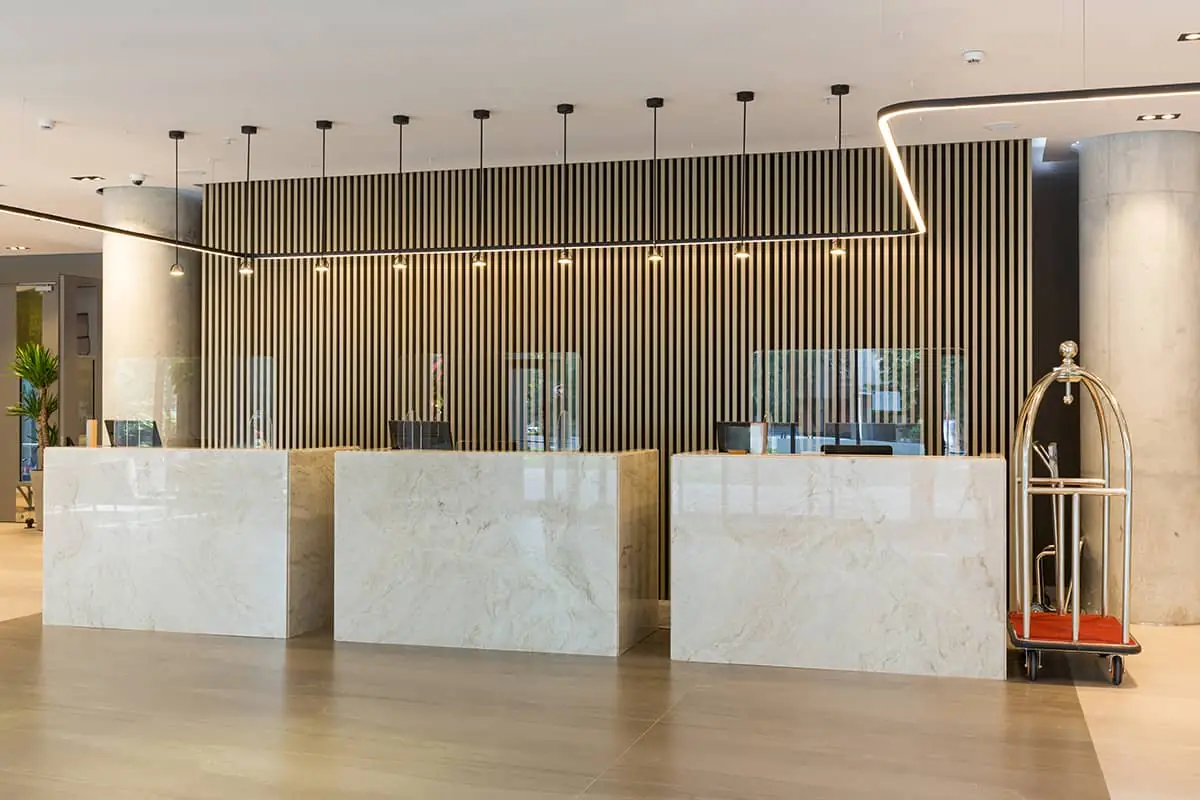
When evaluating what it truly means to master how to manage corporate hotels noise issues, analysts must immediately dispel a common myth. Specifically, no single standardized sound-masking protocol fits every enterprise property across global markets. For example, a senior software engineer deploying to Manhattan operates under entirely different environmental constraints than an auditor stationed at a suburban highway property. Moreover, a pervasive misunderstanding is the white-noise illusion. Many assume that portable sound machines automatically neutralize structural acoustic failures. In reality, learning how to manage corporate hotels noise issues depends heavily on analyzing architectural sound transmission class ratings and HVAC vibration dampening.
Furthermore, analyzing how organizations evaluate how to manage corporate hotels noise issues requires looking past headline star ratings. Organizations frequently adopt restrictive travel policies without verifying whether hotel properties support deep restorative sleep. However, they often experience severe institutional leakage when chronic environmental noise leads to executive fatigue. Assessing how to manage corporate hotels noise issues demands an audit of silent performance metrics. These metrics include decibel attenuation coefficients and window glazing specifications. Therefore, leadership examines how to manage corporate hotels noise issues through a holistic lens to build an adaptive environmental framework.
Structural Sound Transmission
Commercial properties are engineered with varying degrees of acoustic isolation. Consequently, organizations focusing on how to manage corporate hotels noise issues must prioritize auditing structural sound transmission ratings during property selection. Furthermore, understanding how to manage corporate hotels noise issues involves recognizing that unmitigated flanking noise through HVAC ducts frequently accounts for significant sleep disruption.
Structural Oversimplifications and Risk Factors
A critical error in financial planning is treating environmental noise complaints as isolated administrative anomalies. When finance teams evaluate how to manage corporate hotels noise issues, they must measure the true opportunity cost of sleep deprivation. Therefore, mastering how to manage corporate hotels noise issues requires continuous vendor accountability auditing and programmatic enforcement.
Deep Contextual Background: The Evolution of Commercial Acoustic Governance
The governance of commercial lodging environments has transitioned through distinct developmental phases over past decades. In the mid-20th century, travel relied on heavy masonry construction and thick plaster walls that naturally attenuated street noise. Later, the rise of lightweight modern curtain-wall architecture catalyzed a profound shift, introducing pervasive low-frequency hums. Today, the landscape is defined by the Integrated Ecosystem Era. In this era, when professionals study how to manage corporate hotels noise issues, they observe a convergence of acoustic engineering standards and digital decibel monitoring tools. Consequently, static complaint-handling models have transformed into preventative property acoustic vetting architectures.
Historical Shifts in Hospitality Acoustic Design
Early commercial travel programs assumed that ambient noise was an unavoidable byproduct of urban travel. However, contemporary workforce demographics and scientific evidence linking chronic noise exposure to cognitive fatigue have prompted organizations to rethink their standards. As a result, travel management teams now recognize that knowledge workers require acoustically controlled environments to maintain high-level decision-making capacity across multi-city deployments.
Modern Digital Oversight
Today, leading enterprises utilize advanced travel management platforms equipped with environmental feedback loops to track property-level noise grievances. Thus, automated systems instantly flag properties exhibiting recurring acoustic complaints and restrict further bookings. Furthermore, this digital oversight removes administrative friction, ensuring complete environmental compliance across diverse corporate portfolios.
Conceptual Frameworks and Mental Models
-
The Decibel-Cognition Attenuation Model: Measures how exterior and interior sound pressure levels impact human sleep architecture and next-day cognitive performance.
-
The Sound Transmission Class Hierarchy: Evaluates the structural acoustic insulation value of walls, doors, and windows.
-
The Environmental-Friction Equilibrium: A structural framework mapping the correlation between unmanaged lodging noise and cumulative productivity loss.
Key Categories of Acoustic Vulnerabilities in Business Lodging
| Acoustic Vulnerability Category | Primary Root Cause / Driver | Primary Impact | Mitigation Protocol |
| Exterior Urban Traffic & Sirens | Lightweight glass glazing & thin frames | High-frequency sleep interruption & speech interference | Mandate double-pane laminated acoustic glass standards |
| Corridor & Doorway Flanking Noise | Unsealed door gaps & thin wood panels | Footsteps, housekeeping chatter, & elevator chimes | Install automatic door sweeps and perimeter acoustic seals |
| Inter-Room Partition Sound Bleed | Lightweight drywall & hollow studs | TV audio, telephone calls, & private conversation leak | Prioritize properties with masonry or insulated party walls |
| Mechanical HVAC Vibration Hum | Unbalanced rooftop chillers & old fan coils | Low-frequency fatigue & persistent sleep disruption | Audit mechanical room isolation and request room relocation |
| Plumbing & Water Hammer Transmissions | Uninsulated riser pipes & loose mounts | Sudden pipe thumps during nocturnal water usage | Select upper-floor rooms away from central stack risers |
| Atrium & Public Space Reverberation | Hard marble surfaces & open-plan lobbies | Echo propagation reaching lower guest room tiers | Avoid inner-courtyard atrium-facing rooms |
| Adjoining Door Cavity Resonance | Locked interconnecting guest doors | Direct acoustic bridging between adjacent rooms | Inspect and verify permanent sealing of connecting panels |
| Adjacent Construction & Infrastructure | Unmapped urban development projects | Daytime vibration and early morning hammering | Implement real-time local infrastructure monitoring |
Organizations must map their operational footprints against these categories. For instance, firms seeking mastery over how to manage corporate hotels noise issues within a dense metropolitan framework often blend exterior acoustic glass audits with corridor door-sealing mandates.
Decision Logic for Environmental Control
When a lodging reservation is submitted, automated corporate booking software must analyze property acoustic profiles against traveler performance requirements. If an enterprise executive is deploying for high-stakes negotiations, automated systems prioritize properties featuring proven STC ratings and quiet upper-floor placements. Conversely, standard administrative travel utilizes verified properties with baseline compliance.
Detailed Real-World Scenarios
-
Scenario: The Urban Core Traffic Disruption. A senior strategist booked into a midtown hotel overlooking a major thoroughfare experiences severe sleep deprivation due to uninsulated windows facing ambulance routes. A robust protocol addressing how to manage corporate hotels noise issues mandates immediate relocation to upper-floor courtyard-facing suites.
-
Scenario: The Interconnecting Door Privacy Breach. A legal consultant discovers that normal-volume conversations pass through an unsealed interconnecting door. Establishing pre-trip room-inspection checklists prevents catastrophic confidentiality breaches.
-
Scenario: The Rooftop Chiller Low-Frequency Hum. An engineering team is assigned to top-floor rooms situated directly beneath unisolated HVAC chillers, resulting in chronic fatigue. Requiring mechanical isolation audits eliminates persistent infrastructure noise.
-
Scenario: The Early Morning Housekeeping Corridor Surge. A consulting team working late is repeatedly awakened by housekeeping carts rolling over uncarpeted tile flooring. Selecting properties with fully carpeted hallways restores rest integrity.
-
Scenario: The Unmapped Street Construction Shock. A delegation arrives at a hotel only to discover unannounced city street reconstruction generating intense drilling noise. Utilizing real-time local infrastructure tracking tools flags active municipal noise zones.
Planning, Cost, and Resource Dynamics
The economic management of travel acoustic governance demands a clear separation between direct vetting fees and human capital preservation costs. When organizations formulate strategies to address how to manage corporate hotels noise issues, they must account for specific financial variables:
| Cost Component | Typical Impact | Variability Range |
| Acoustic Vetting Platform Licensing | Low to Moderate | Low |
| Property Audit & Inspection Overhead | Moderate | Moderate |
| Internal Employee Productivity Loss | High | High |
| Net Restorative & Performance Gain | Very High | Extreme |
Accounting for these variables ensures that acoustic optimization does not inflate administrative labor beyond the value of preserved capital. Furthermore, organizations must weigh fixed platform costs against the variable cost of unmonitored environmental friction.
The Risk Landscape and Failure Modes
The primary failure mode in corporate environmental noise administration is the reactive-complaint trap. Organizations take no preventative action, forcing exhausted travelers to negotiate room changes at midnight. Compounding this risk is the neglect of architectural vetting. Failing to audit building construction standards regularly signals to hospitality providers that acoustic quality tracking is lax. Furthermore, relying entirely on traveler self-reporting leaves organizations vulnerable to duty-of-care blind spots.
Compounding Vulnerabilities in Distributed Portfolios
When organizations scale across multiple markets, inconsistent environmental policies create widespread traveler dissatisfaction. If corporate travel management platforms lack acoustic quality feedback loops, finance teams remain blind to localized property degradation. Consequently, organizations must centralize all environmental lodging data into a unified analytics dashboard.
Governance, Maintenance, and Long-Term Adaptation
-
The Rolling Quarterly Acoustic Review: Shift away from static annual evaluations. Instead, use rolling quarterly assessments of decibel complaints to refine approved hotel portfolios.
-
Automated Environmental-Trigger Alerts: Establish programmatic software flags that highlight unusual spikes in noise-related grievances to initiate instant management reviews.
-
Layered Governance Checklists: Require multi-departmental sign-off from Human Resources, Travel Operations, and Procurement before executing preferred property agreements.
-
Continuous Policy Refinement: Update travel acoustic guidelines biannually to reflect emerging urban soundscape trends and architectural innovations.
Measurement, Tracking, and Evaluation
-
Leading Indicators: Percentage of enterprise bookings executed within acoustically verified properties and adoption rates of pre-trip environmental preference selections.
-
Lagging Indicators: Total annual lodging-related noise grievances and frequency of health-related travel complaints.
-
Documentation Example: The “Corporate Acoustic Performance Ledger,” which tracks decibel ratings and STC compliance scores across all contracted hotel groups.
-
Documentation Example: The “Environmental Portfolio Compliance Report,” evaluating departmental adherence to approved acoustic property guidelines on a monthly basis.
Common Misconceptions and Oversimplifications
-
“Hotel noise is an inevitable part of travel that employees must simply tolerate.” Chronic sleep disruption severely degrades cognitive function, making environmental acoustic control a vital business imperative.
-
“All major hotel brands provide consistent acoustic insulation across their properties.” Significant structural and age-related differences exist between individual properties even within the same corporate flag.
-
“Providing white-noise machines fully resolves structural acoustic deficiencies.” White-noise devices mask minor ambient sounds but fail to block low-frequency HVAC hums or loud speech.
-
“Small business travel requires no formal environmental or acoustic oversight.” Small enterprises benefit immensely from structured lodging selection guidelines prioritizing restorative sleep.
-
“Consumer travel sites offer better acoustic property data than managed corporate portals.” Consumer platforms lack verified architectural audits and integrated feedback reconciliation capabilities.
-
“Corporate card data alone is sufficient for comprehensive travel program evaluation.” Without itemized environmental feedback loops, finance teams cannot measure the human cost of poor lodging selections.
-
“Digital booking apps eliminate operational compliance challenges for business travel.” Software streamlines reservations, but programmatic success relies entirely on rigorous pre-trip contracting.
Conclusion
The architecture of a resilient travel program—and the successful mastery of how to manage corporate hotels noise issues—requires an ongoing commitment to analytical rigor and strategic vendor oversight. Organizations that replace passive expense reimbursement with adaptive environmental frameworks transform their lodging noise management into a powerful engine of talent support. In an unpredictable global marketplace, the ability to protect cognitive performance and systematically hold hospitality partners accountable remains the ultimate benchmark of corporate excellence.