The contemporary professional landscape relies heavily on distributed project teams, client-facing site visits, and multi-location operational deployments. Because of this structural shift, the procurement and precise management of professional lodging has become a core pillar of institutional efficiency. When enterprises approach accommodation selection and booking management through a legacy lens—treating individual reservations as simple transactional tasks handled ad-hoc by employees or fragmented departmental assistants—they consistently encounter hidden friction costs. Consequently, these expenses manifest as administrative overhead, lost billing accuracy, employee burnout, and severe policy non-compliance. In today’s competitive global economy, the precision with which an organization controls its booking architecture directly influences project execution speed, traveler security, and overall capital allocation.
Achieving structural mastery in travel management requires a deliberate pivot. Organizations must move from reactive booking toward a proactive, systemic framework tailored for enterprise-wide scale. Travel directors and procurement architects must view reservation workflows not as isolated administrative chores. Instead, they must treat them as vital data nodes within an integrated corporate supply chain. This approach involves balancing regional market dynamics, shifting labor agreements, and the continuous evolution of digital enterprise tooling. By harmonizing these disparate elements, organizations construct programs that act as strategic assets. Ultimately, these programs shield teams from logistical volatility while preserving fiscal discipline across every booked night.
This article delivers a rigorous examination of institutional lodging strategies. Specifically, it focuses on how enterprises design, implement, and evaluate the methodologies required to know how to manage corporate hotels reservations across global markets. We bypass superficial cost-cutting tropes to explore the structural anatomy of corporate booking channels. Furthermore, we examine the risks of mismanaged inventories and the exact governance models required to maintain long-term authority. Our objective is to establish a definitive reference point. Through this, organizations can turn accommodation procurement into a resilient, empowering driver of corporate success.
Understanding how to manage corporate hotels reservations
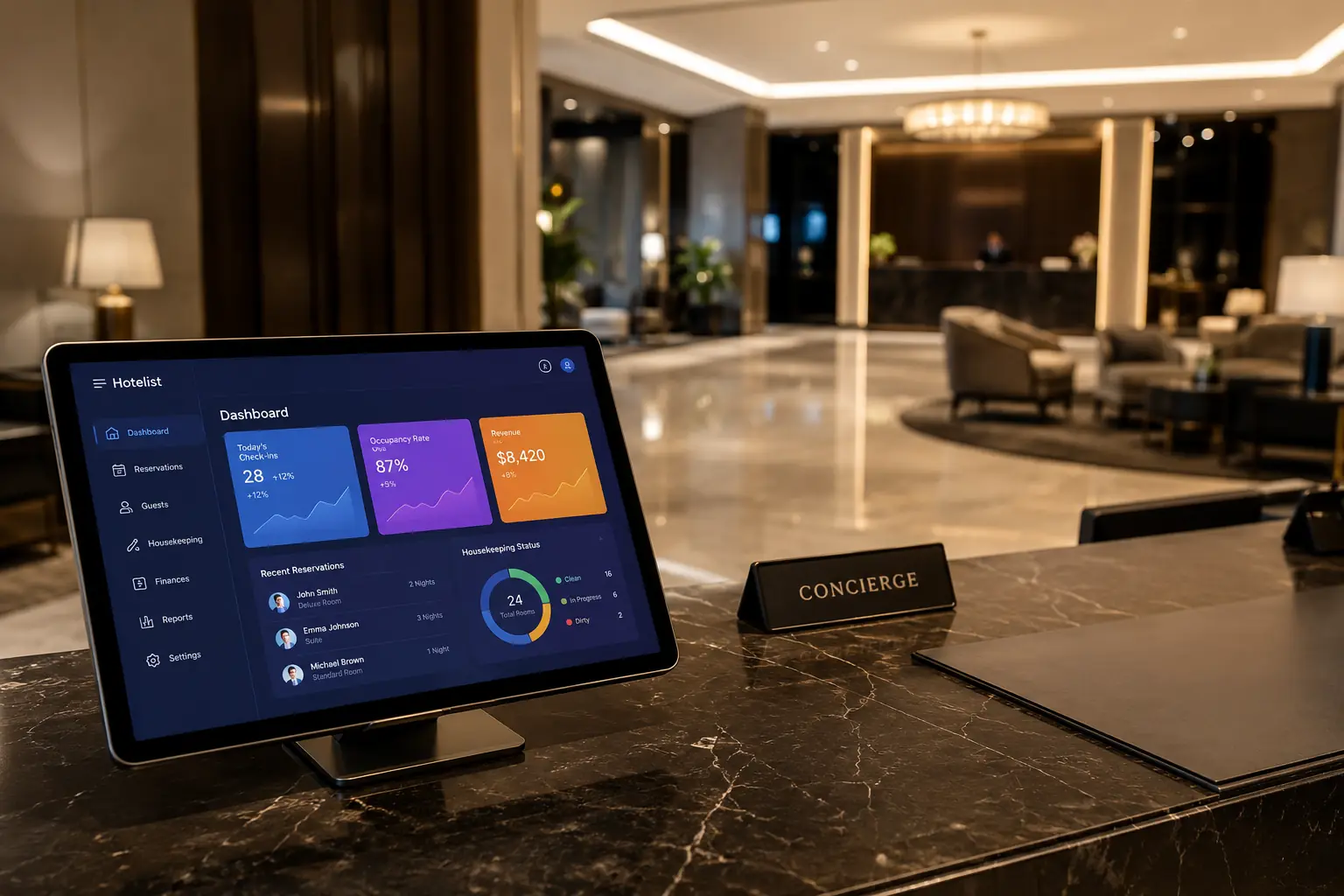
When evaluating what it truly means to master how to manage corporate hotels reservations, analysts must immediately dispel a common myth. Specifically, no single standardized booking protocol fits every enterprise or traveler persona. For example, a senior executive securing a high-security board-meeting suite operates under entirely different constraints than an IT support technician booking a last-minute room near a regional data center. Moreover, a pervasive misunderstanding is the “portal-omnipotence” fallacy. Many assume that simply deploying an enterprise self-booking tool automatically guarantees full policy compliance and flawless reservation execution. In reality, learning how to effectively how to manage corporate hotels reservations depends heavily on localized property management responsiveness, API synchronization between GDS networks and hotel property management systems, and flexible cancellation clauses during unforeseen market shocks.
Furthermore, analyzing how organizations learn how to manage corporate hotels reservations requires looking past headline booking completion rates. Organizations frequently adopt rigid, highly restrictive booking channels to secure lower upfront rates. However, they often experience severe financial leakage when employees bypass approved systems due to poor user interfaces or missing inventory. Assessing how to manage corporate hotels reservations demands an audit of silent performance metrics. These include automated profile synchronization, robust duty-of-care traveler tracking, and seamless integration with corporate expense ledgers. When leadership examines how to manage corporate hotels reservations through this holistic lens, the focus shifts. Instead of a race to the bottom on nightly room rates, the goal becomes optimizing the entire reservation lifecycle from initial search to final folio reconciliation.
Deep Contextual Background: The Evolution of Institutional Booking Management
The administration of corporate reservations has transitioned through distinct developmental phases over the past several decades. In the mid-20th century, corporate bookings relied on direct phone calls to hotel sales desks, paper vouchers, and manual travel agency ledgers. Later, the advent of Global Distribution Systems catalyzed the electronic consolidation of inventory, introducing digital transparency and shifting power toward centralized travel management companies. Today, the landscape is defined by the “Integrated Ecosystem Era.” In this era, when professionals study how to manage corporate hotels reservations, they integrate real-time dynamic pricing, automated duty-of-care data feeds, and API-driven enterprise resource planning connections. Consequently, static manual booking logs have transformed into dynamic, programmatic reservation engines.
Conceptual Frameworks and Mental Models
-
The Channel-Friction Model: Measures the administrative burden and user resistance caused by restrictive booking platforms, proving that overly complex reservation rules often cost more in lost employee time than they save in room rates.
-
The Inventory-Redundancy Spectrum: Evaluates the necessity of maintaining primary and secondary hotel block allocations in high-volatility transit nodes to protect against sudden sell-outs.
-
The Data-Integrity Matrix: A structural approach to mapping reservation metadata—such as traveler loyalty numbers, cost-center codes, and tax identifiers—between booking engines and corporate accounting ledgers.
Key Categories of Reservation Management Workflows
Organizations must map their specific operational footprints against these categories. For instance, firms seeking to master how to manage corporate hotels reservations within a multinational framework often blend centralized TMC portals for routine travel with managed consumer apps and API-driven direct channels for agile regional teams.
Detailed Real-World Scenarios
-
Scenario: The Regional Infrastructure Failure. A major severe weather event strands fifty employees across multiple airports. A robust protocol on how to manage corporate hotels reservations succeeds only if the booking system includes automated mass re-accommodation triggers and direct property communication pipelines.
-
Scenario: The Executive Last-Minute Re-Routing. A senior executive requires an immediate room change during an active international negotiation. The failure mode is a disconnected reservation profile that loses loyalty preferences and billing routing, creating administrative chaos upon checkout.
-
Scenario: The Multi-Departmental Cost-Center Mismatch. A large project team books rooms through three different channels under vague accounting tags. Establishing a strict framework on how to manage corporate hotels reservations resolves this by enforcing mandatory cost-center tagging at the initial search query level.
-
Scenario: The Ghost Booking Audit. An enterprise notices dozens of reserved rooms sitting empty due to forgotten cancellations. Implementing systematic review protocols within how to manage corporate hotels reservations eliminates no-show penalties through automated cancellation alerts tied to trip start dates.
Planning, Cost, and Resource Dynamics
The economic management of reservation workflows demands a clear separation between direct transaction fees and hidden operational burdens. When organizations formulate their policies on how to manage corporate hotels reservations, they must account for specific financial variables:
Accounting for these variables ensures that the pursuit of cheap booking channels does not inadvertently inflate internal accounting overhead, dispute resolution hours, or traveler frustration.
The Risk Landscape and Failure Modes
The primary failure mode in reservation design is “The Shadow Booking Phenomenon,” where employees bypass official tools because they find consumer platforms faster or more flexible. This behavior breaks the chain of custody for traveler safety data. Compounding this risk is the neglect of “Duty of Care” tracking; if reservations are made outside approved channels, the security team cannot locate personnel during a regional emergency. Furthermore, failing to secure encrypted virtual card routing within reservation profiles invites fraudulent folio charges and unauthorized incidental spending.
Governance, Maintenance, and Long-Term Adaptation
-
The Bi-Monthly Channel Audit: Shift away from static annual tool reviews. Instead, use rolling bi-monthly evaluations of booking tool adoption rates, error logs, and user feedback.
-
Automated Exception Triggers: Establish programmatic thresholds—such as repeated off-channel bookings by specific departments—that automatically prompt a policy review or counseling session.
-
Layered Governance Checklists: Require multi-departmental sign-off from Procurement, IT Security, Legal, and Travel Operations before modifying enterprise reservation software configurations.
Measurement, Tracking, and Evaluation
-
Leading Indicators: Adoption rate of approved booking tools, average lead-time for advance reservations, and frequency of policy exception requests.
-
Lagging Indicators: Total program savings relative to market benchmarks, employee satisfaction scores regarding travel tooling, and frequency of billing reconciliation disputes.
-
Documentation Example: The “Reservation Accuracy Audit,” which tracks booking errors, ghost reservations, and cost-center misallocations across every operating unit.
-
Documentation Example: The “Policy Compliance Ledger,” evaluating departmental adherence to approved booking channels on a monthly basis.
Common Misconceptions and Oversimplifications
-
“Online booking tools eliminate all reservation errors.” Software only executes the data fed into it; poor profile integration between HR directories and booking tools causes persistent name and billing mismatches.
-
“Traveler satisfaction is independent of the booking experience.” A clunky, slow reservation interface frustrates employees before their trip even begins, damaging morale and productivity.
-
“More restrictive booking rules equal better savings.” Overly draconian reservation policies drive employees toward shadow booking, destroying visibility and increasing total risk.
-
“Small business travel requires no formal booking structure.” Even small teams benefit immensely from centralized reservation tracking and automated invoice reconciliation.
-
“Policy enforcement requires strict punitive measures.” True compliance with reservation standards is achieved by making the authorized booking path the most intuitive and rewarding option.
-
“Corporate reservations are a static administrative task.” Modern travel management views reservation architecture as a dynamic data ecosystem directly linked to corporate agility.
-
“All hotel inventory is accessible through a single channel.” Certain properties and negotiated rates require specialized direct-connect APIs or managed agency desks to secure properly.
Conclusion
The architecture of a resilient travel program—and the successful ability to master how to manage corporate hotels reservations—requires an ongoing commitment to analytical rigor, technical integration, and user-centric design. Organizations that replace rigid, punitive mandates with adaptive, data-driven reservation frameworks transform their lodging administration from an operational bottleneck into a strategic advantage. In an unpredictable global marketplace, the ability to protect capital, secure traveler well-being, and maintain flawless data integrity across every reservation remains the ultimate benchmark of institutional excellence.