The contemporary professional landscape relies heavily on distributed project teams and multi-week operational deployments. Because of this structural shift, the procurement and management of long-term professional lodging has become a core pillar of institutional efficiency. When enterprises approach accommodation selection through a legacy lens—treating multi-week or multi-month hotel contracts as simple nightly bookings—they consistently encounter hidden friction costs. Consequently, these expenses manifest as administrative overhead, employee burnout, and severe policy non-compliance. In today’s globalized economy, the physical and digital infrastructure of a prolonged business stay directly influences talent retention, project execution speed, and overall capital allocation.
Achieving structural mastery in travel management requires a deliberate pivot. Organizations must move from reactive booking toward a proactive, systemic framework tailored for prolonged engagements. Travel directors and procurement architects must view extended lodging partnerships not as isolated vendor arrangements. Instead, they must treat them as vital nodes within an integrated corporate supply chain. This approach involves balancing regional market dynamics, shifting labor agreements, and the continuous evolution of digital enterprise tooling. By harmonizing these disparate elements, organizations construct programs that act as strategic assets. Ultimately, these programs shield teams from logistical volatility while preserving fiscal discipline during extended deployments.
This article delivers a rigorous examination of institutional lodging strategies. Specifically, it focuses on how enterprises design, implement, and evaluate the methodologies required to identify and secure the best corporate hotels for extended stays across global markets. We bypass superficial cost-cutting tropes to explore the structural anatomy of extended-stay corporate agreements. Furthermore, we examine the risks of mismanaged contracts and the exact governance models required to maintain long-term authority. Our objective is to establish a definitive reference point. Through this, organizations can turn extended accommodation procurement into a resilient, empowering driver of corporate success.
Understanding best corporate hotels for extended stays
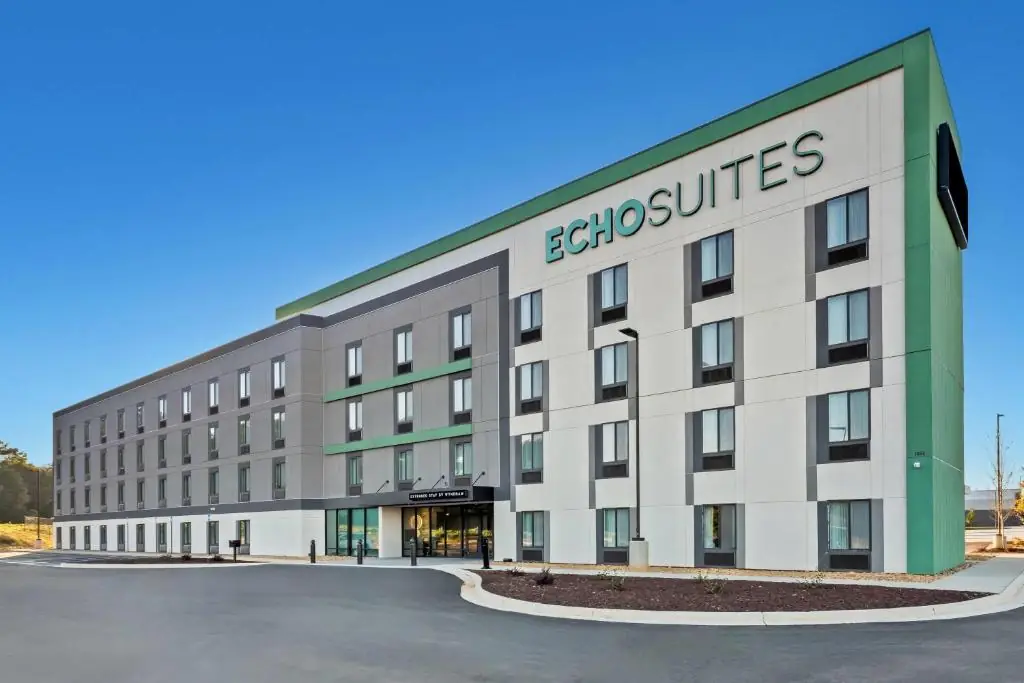
When evaluating what constitutes the best corporate hotels for extended stays, analysts must immediately dispel a common myth. Specifically, no single standardized agreement or property type fits every long-term project. For example, a team of engineers deploying for a six-month software integration operates under entirely different constraints than a rotating roster of consultants on a weekly rotation. Moreover, a pervasive misunderstanding is the “homogeneous asset” fallacy. Many assume a brand’s corporate discount program guarantees consistent living comfort, kitchen facilities, and high-speed bandwidth across all extended-stay franchise locations. In reality, learning how to evaluate the best corporate hotels for extended stays depends heavily on localized property management responsiveness, workspace ergonomics, and flexible tier-pricing structures during project extensions.
Furthermore, analyzing how organizations select the best corporate hotels for extended stays requires looking past headline nightly discounts. Organizations frequently adopt rigid, high-volume contracts to secure lower daily rates. However, they often experience high financial leakage when projects shift timelines and restrictive cancellation terms trigger heavy penalties. Assessing the best corporate hotels for extended stays demands an audit of silent performance metrics. These include integrated laundry facilities, robust duty-of-care tracking, secure enterprise-grade Wi-Fi, and seamless integration with corporate travel management software. When leadership examines how to identify the best corporate hotels for extended stays through this holistic lens, the focus shifts. Instead of a race to the bottom on room rates, the goal becomes optimizing the prolonged-stay productivity and well-being ecosystem.
Deep Contextual Background: The Evolution of Institutional Extended Lodging
The administration of prolonged business travel has transitioned through distinct developmental phases over the past several decades. In the mid-20th century, extended corporate assignments relied heavily on long-term residential leases or traditional apartment sublets managed independently by human resources. Later, the rise of specialized extended-stay brands catalyzed the consolidation of apartment-style inventory within hotel-managed ecosystems. This introduced predictable service standards while maintaining domestic living amenities. Today, the landscape is defined by the “Integrated Ecosystem Era.” In this era, when professionals evaluate the best corporate hotels for extended stays, they integrate real-time dynamic pricing, automated tiered-stay discounting, and API-driven enterprise resource planning connections. Consequently, static monthly leases have transformed into dynamic, scalable, data-responsive lodging frameworks.
Conceptual Frameworks and Mental Models
-
The Residential-Friction Model: Measures the cognitive and administrative burden placed on an employee during multi-week stays, proving that inadequate kitchen and workspace facilities directly degrade project output.
-
The Temporal-Scaling Spectrum: Evaluates the economic inflection point where transient nightly rates must transition into weekly tier discounts, monthly corporate blocks, or direct extended-stay agreements.
-
The Data-Integrity Matrix: A structural approach to mapping multi-week billing cycles between property management systems and internal corporate accounting ledgers to prevent recurring billing errors.
Key Categories of Extended-Stay Corporate Programs
| Program Category | Primary Driver | Primary Outcome | Limitation |
| All-Suite Extended Brands | Standardized Living | Predictable workspace & kitchen | Limited boutique character |
| Corporate Apartment Blocks | Neighborhood Integration | True residential privacy | High administrative setup overhead |
| Boutique Extended Networks | Design & Culture | Enhanced traveler morale | Fragmented global footprint |
| Long-Term Project Master Leases | Maximum Rate Discount | Guaranteed inventory caps | High capital commitment risk |
| Serviced Urban Residences | Central Location | Immediate transit access | Premium pricing tier |
| Fractional Managed Units | Flexibility | Scalable room counts | Low availability predictability |
| Consolidated Preferred Portfolios | Policy Compliance | Streamlined multi-week billing | Vendor lock-in vulnerabilities |
| On-Demand Platform Networks | Agility & Reach | Immediate regional access | Lower contractual rate control |
Organizations must map their specific extended-stay footprints against these categories. For instance, firms seeking the best corporate hotels for extended stays within a global project framework often blend standardized all-suite brands for predictable regional hubs with agile corporate apartment blocks for specialized technical deployments.
Detailed Real-World Scenarios
-
Scenario: The Extended Engineering Deployment. A software firm deploys a core team for a four-month systems migration. Treating this as transient nightly bookings causes massive budget overruns. Therefore, transitioning to structured multi-week extended-stay blocks preserves capital.
-
Scenario: The Mid-Project Timeline Shift. A consulting engagement extends unexpectedly by three weeks. The chosen extended-stay property succeeds only if its contract terms feature flexible, rolling tier-rate protections without sudden rate spikes.
-
Scenario: The Remote-Welfare Breakdown. An employee living in a standard hotel room for six weeks experiences severe isolation and nutritional fatigue. Utilizing properties identified among the best corporate hotels for extended stays—featuring full kitchens and separate workspaces—mitigates burnout and maintains performance.
-
Scenario: The Multi-Currency Billing Discrepancy. A multinational project generates complex multi-month folio statements with recurring incidental charges. Standardizing the reconciliation process through automated expense feeds eliminates long-term accounting bottlenecks.
Planning, Cost, and Resource Dynamics
The economic management of extended travel programs demands a clear separation between direct procurement costs and hidden operational burdens. When organizations formulate their long-term lodging portfolios and evaluate the best corporate hotels for extended stays, they must account for specific financial variables:
| Cost Component | Typical Impact | Variability Range |
| Tiered Monthly/Weekly Rates | High (Primary) | Low to Moderate |
| Ancillary Utility & Cleaning Fees | Moderate | Low |
| Administrative Reconciliation | Low-Moderate | Moderate |
| Opportunity Cost of Burnout | Very High | Extreme |
Accounting for these variables ensures that the pursuit of low initial room rates does not inadvertently inflate internal accounting disputes, employee turnover, or lost productivity over multi-month assignments.
The Risk Landscape and Failure Modes
The primary failure mode in prolonged program design is “The Isolation Trap,” where employees are housed in sterile, transient environments for months, leading to decreased engagement and attrition. Compounding this risk is the neglect of comprehensive “Duty of Care” standards for long-term residents. Selecting extended properties based solely on monthly discounts without auditing neighborhood security, fire safety protocols, and emergency medical access exposes the organization to severe liability. Furthermore, failing to secure encrypted, high-bandwidth networks for employees working remotely from extended-stay units invites enterprise-level cyber vulnerabilities.
Governance, Maintenance, and Long-Term Adaptation
-
The Bi-Monthly Review Cycle: Shift away from static annual request-for-proposal cycles for extended projects. Instead, use rolling bi-monthly evaluations of supplier performance, rate fairness, and traveler feedback.
-
Automated Extension Triggers: Establish programmatic thresholds—such as project milestone extensions—that automatically lock in extended-stay rate tiers without requiring manual renegotiation.
-
Layered Governance Checklists: Require multi-departmental sign-off from Procurement, Legal, Security, and Human Resources before onboarding multi-month lodging agreements.
Measurement, Tracking, and Evaluation
-
Leading Indicators: Adoption rate of approved extended-stay booking channels, average project assignment lead-time, and frequency of property change requests.
-
Lagging Indicators: Total program savings relative to transient market benchmarks, employee satisfaction metrics during long-term assignments, and frequency of safety or health incidents.
-
Documentation Example: The “Extended-Stay Project Audit,” which archives every supplier disruption, billing error rate, and policy adjustment made across multi-month deployments.
-
Documentation Example: The “Traveler Well-Being Ledger,” tracking qualitative burnout and productivity signals across extended assignments.
Common Misconceptions and Oversimplifications
-
“Monthly rates are always cheaper than weekly blocks.” Rigid monthly commitments can sometimes exceed flexible tiered rates if project timelines contract unexpectedly.
-
“Extended stay means sacrificing business amenities.” Modern enterprise-grade extended-stay properties offer dedicated meeting rooms, business centers, and robust tech infrastructure.
-
“Traveler satisfaction matters less on long stays.” In reality, small operational annoyances compound exponentially over a multi-month assignment, destroying productivity.
-
“Small independent apartments are safer than branded extended stays.” Branded properties offer standardized emergency protocols, professional maintenance, and reliable security.
-
“Policy enforcement is easier for long stays.” Extended stays often tempt employees to seek unauthorized alternative rentals, increasing compliance leakage.
-
“Corporate lodging is a fixed operational overhead.” Modern procurement views extended-stay strategies as dynamic investments directly tied to project delivery speed.
-
“All extended-stay ratings are objective.” Consumer review scores frequently ignore critical business infrastructure needs like stable VPN connectivity and quiet, ergonomic workspaces.
Conclusion
The architecture of a resilient travel program—and the successful ability to secure the best corporate hotels for extended stays—requires an ongoing commitment to analytical rigor. Organizations that replace rigid transient mandates with adaptive, long-term frameworks transform their lodging strategy into a competitive advantage. In an unpredictable global marketplace, the ability to protect capital while empowering the human workforce during extended deployments remains the ultimate benchmark of operational excellence.