The contemporary commercial landscape relies heavily on distributed project teams, multi-city executive rotations, and structured client engagement across diverse regional hubs. Because of this structural interdependence, the evaluation of professional lodging assets has evolved beyond simple financial transactions to encompass a distinct socio-spatial culture. When enterprises approach accommodation selection through a legacy lens—treating properties as sterile rooms rather than active environments—they overlook the profound impact that property design and service ecosystems exert on professional productivity, mental fatigue, and organizational loyalty. In today’s competitive commercial economy, understanding the nuanced realities of the american corporate hotels lifestyle directly influences executive retention, talent deployment efficiency, and overall enterprise resilience.
Transforming Lodging Evaluation Workflows
Achieving structural mastery in travel management requires a deliberate pivot. Organizations must move from reactive room booking toward a proactive, systemic framework tailored for enterprise-wide scale. Travel directors, operational controllers, and corporate human resources teams must view accommodation environments not as isolated rest stops. Instead, they must treat them as vital operational nodes within an integrated corporate supply chain that shapes employee well-being and daily performance. This approach involves balancing regional market volatility, property-level ergonomic standards, digital infrastructure reliability, and the continuous evolution of mobile work patterns. By harmonizing these disparate elements, organizations construct programs that act as strategic shields against traveler burnout, protecting institutional capital across every booked night.
This article delivers a rigorous examination of institutional lodging strategies, focusing specifically on how enterprises analyze and adapt to the american corporate hotels lifestyle across major commercial markets. We bypass superficial travel-blog tropes to explore the structural anatomy of corporate booking channels, property wellness architectures, and digital productivity ecosystems. Furthermore, we examine the compounding nature of travel fatigue and the exact governance models required to maintain long-term authority. Our objective is to establish a definitive reference point. Through this, organizations can turn travel accommodation management into a resilient, empowering driver of corporate success.
Understanding american corporate hotels lifestyle
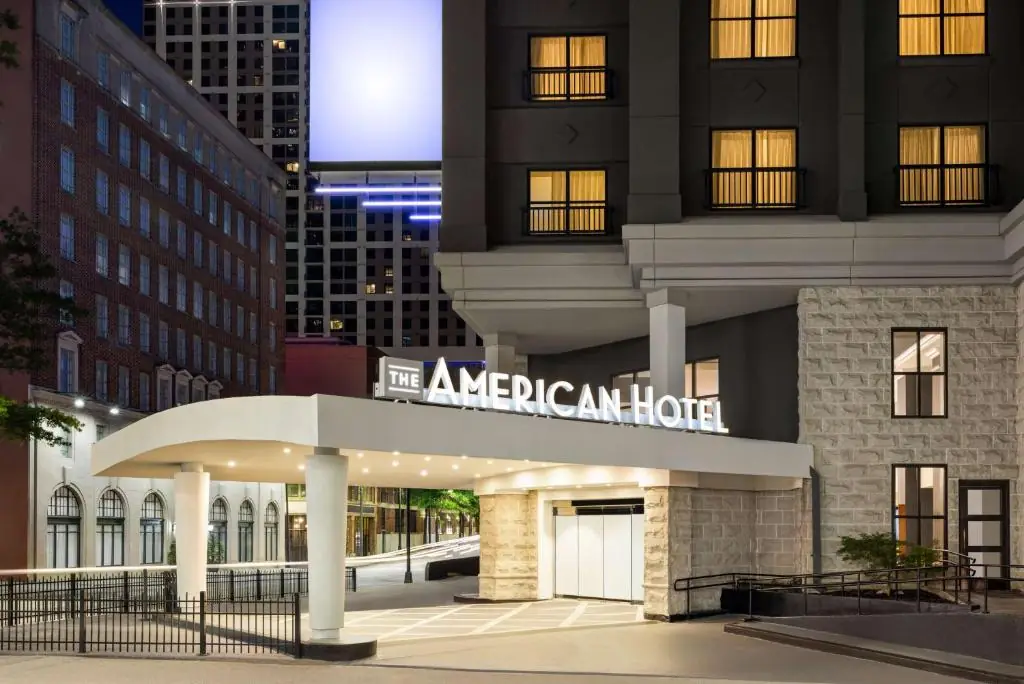
When evaluating what it truly means to analyze the american corporate hotels lifestyle, analysts must immediately dispel a common myth. Specifically, no single standardized lifestyle experience fits every enterprise property or traveler persona across the United States. For example, a senior software architect deploying to a high-density tech incubator in San Francisco operates under entirely different environmental, ergonomic, and social constraints than a regional manufacturing auditor stationed at a highway property in the Midwest. Moreover, a pervasive misunderstanding is the homogenization illusion. Many assume that corporate properties across major US brands offer interchangeable physical environments and uniform service cultures. In reality, learning how to navigate the american corporate hotels lifestyle depends heavily on analyzing regional property design variations, local labor agreements, lobby activation strategies, and property-level management consistency.
Furthermore, analyzing how organizations evaluate the american corporate hotels lifestyle requires looking past headline marketing imagery and loyalty program tiers. Organizations frequently adopt restrictive travel policies without verifying whether the underlying hotel properties support healthy sleep hygiene, proper workspace ergonomics, and nutritional consistency. However, they often experience severe institutional attrition when frequent travel demands lead to chronic exhaustion and professional burnout. Assessing the american corporate hotels lifestyle demands an audit of silent performance metrics. These include property acoustic isolation ratings, air filtration quality, 24-hour fitness facility utility, and seamless digital integration with corporate productivity suites. When leadership examines the american corporate hotels lifestyle through this holistic lens, the focus shifts toward building an adaptive support framework that prioritizes human capital preservation across the entire travel lifecycle.
The Nuance of Spatial Zoning in Transient Spaces
Evaluating the american corporate hotels lifestyle requires a granular understanding of how modern business properties balance public socialization zones with private workspaces. Properties that excel in supporting modern professionals feature modular lobby co-working spaces, high-speed encrypted guest networks, and quiet zones designed for deep focus. Consequently, organizations must assess these environmental attributes prior to selecting preferred property portfolios.
Structural Oversimplifications and Risk Factors
A critical error in travel program design is assuming that loyalty status automatically equates to traveler well-being. When corporate travel planners evaluate the american corporate hotels lifestyle, they must audit property-level health amenities, nutritional availability, and circadian lighting design. Therefore, mastering the inclusion of the american corporate hotels lifestyle requires continuous traveler feedback auditing and rigorous property-level operational vetting.
Deep Contextual Background: The Evolution of Business Lodging Culture
The evolution of commercial lodging culture in the United States has transitioned through distinct developmental phases over the past several decades. In the mid-20th century, corporate travel revolved around standardized roadside motels and formal downtown grand hotels, prioritizing rigid formality, predictable uniformity, and distinct separation between work and rest. Later, the rise of suburban office parks and centralized business hubs catalyzed the development of standardized conference hotels featuring enclosed atriums and generic meeting facilities. Today, the landscape is defined by the Integrated Ecosystem Era. In this era, when professionals study the american corporate hotels lifestyle, they observe a profound convergence of remote work mobility, wellness integration, and flexible spatial design. Consequently, static sleeping rooms have transformed into dynamic, multi-functional hubs supporting continuous professional output.
Historical Shifts in Business Hospitality
Early commercial travel programs enforced rigid routines, requiring travelers to conduct business exclusively in designated boardrooms while utilizing public spaces for passive downtime. However, contemporary mobile technologies and shifting workforce expectations have prompted properties to blur the boundaries between work and leisure. As a result, travel management teams now recognize that knowledge workers require agile environments that accommodate erratic schedules, virtual client calls, and personal wellness routines without friction.
Modern Digital Integration
Today, leading corporate hotels utilize advanced property management apps, keyless entry systems, and high-density Wi-Fi networks to streamline the guest experience. Thus, automated systems allow travelers to bypass traditional front desks, customize room temperature and lighting preferences, and stream personal content securely. Furthermore, this digital integration removes administrative friction, allowing executives to focus entirely on core business objectives while on the road.
Conceptual Frameworks and Mental Models
-
The Circadian-Ergonomic Balance Model: Measures how hotel room lighting, acoustic baffling, and workstation ergonomics impact traveler sleep quality and sustained cognitive performance.
-
The Spatial-Blending Continuum: Evaluates the transition between public co-working lobbies and private guest rooms, determining how properties support both collaborative networking and isolated focus.
-
The Friction-Restoration Equilibrium: A structural framework mapping the correlation between travel logistical friction and the availability of property-level wellness amenities designed to restore cognitive energy.
Key Categories of Commercial Lodging Environments
| Lodging Environment | Primary Root Cause / Driver | Primary Impact | Mitigation Protocol |
| Urban Core Lifestyle Towers | Creative Agency & Tech Hubs | High social connectivity and vibrant local dining | Audit room acoustic insulation and air quality |
| Suburban Corridor Business Hotels | Regional Industrial & Sales Hubs | Predictable layouts and convenient highway access | Supplement remote dining options with delivery integrations |
| Extended-Stay Residential Suites | Long-Term Project Deployments | Domestic stability and functional kitchen access | Secure preferred long-term corporate master rates |
| Airport-Adjacent Transit Hubs | Rapid Multi-City Connections | Zero-latency flight access for tight schedules | Mandate premium soundproofing and blackout shades |
| Historic Adaptive-Reuse Properties | Architectural Differentiation | Unique cultural immersion and inspiring spaces | Verify high-speed symmetrical fiber network capacity |
| Boutique Eco-Sanctuaries | Corporate ESG & Wellness Focus | Stress mitigation and sustainability alignment | Inspect auxiliary workspace reliability and security |
| Convention Center Megastructures | Large-Scale Industry Gatherings | Maximum networking density and on-site dining | Navigate high elevator wait times and public congestion |
| Bespoke Corporate Apartment Blocks | Confidential Team Deployments | Complete privacy and unshared common areas | Establish rigorous third-party safety and cleaning audits |
Organizations must map their specific operational footprints against these categories. For instance, firms seeking mastery over the american corporate hotels lifestyle within a dynamic growth framework often blend urban lifestyle towers for client-facing meetings with extended-stay residential suites for prolonged technical project deployments.
Decision Logic for Property Selection
When selecting a hotel property for corporate deployment, travel management software must evaluate traveler persona requirements against pre-configured property ratings. If a project requires intensive data analysis and late-night coding, automated systems prioritize properties featuring ergonomic task chairs, robust Wi-Fi, and quiet floor placements. Conversely, client-facing executive travel prioritizes upscale lifestyle properties with sophisticated lobby hosting facilities.
Detailed Real-World Scenarios
-
Scenario: The Exhausted Consultant Exhaustion Spiral. A management consultant completes a grueling week across three cities, staying in a hotel with poor acoustic insulation and uncomfortable workspace ergonomics, leading to severe sleep deprivation and diminished analytical output. A robust protocol addressing the american corporate hotels lifestyle prioritizes properties verified for superior soundproofing and ergonomic workstation design.
-
Scenario: The Extended-Stay Nutritional Breakdown. An engineering team deployed for two months in a suburban hotel lacking kitchen facilities relies exclusively on heavy restaurant dining, resulting in sluggishness and health complaints. Shifting deployment bookings to extended-stay residential suites restores nutritional control and personal routines.
-
Scenario: The Urban Wi-Fi Congestion Bottleneck. A technology task force attempts to run a critical software deployment from a trendy downtown lifestyle hotel during an evening social event, experiencing severe network throttling in the public lobby. Establishing dedicated in-room enterprise network protocols prevents such operational failures.
-
Scenario: The Red-Eye Arrival Check-In Gridlock. An executive arriving via a red-eye flight encounters a locked room and a long front-desk queue, delaying critical morning preparation. Utilizing mobile app check-in and digital room keys bypasses front-desk delays entirely.
-
Scenario: The Wellness Amenity Discrepancy. A traveling executive booked into a property with a neglected, undersized basement fitness center experiences disrupted physical fitness routines during a multi-week stay. Verifying modern, well-equipped 24-hour wellness facilities preserves traveler well-being.
Planning, Cost, and Resource Dynamics
The economic management of travel lifestyle integration demands a clear separation between direct room tariffs and indirect human capital preservation costs. When organizations formulate strategies to evaluate the american corporate hotels lifestyle, they must account for specific financial variables:
| Cost Component | Typical Impact | Variability Range |
| Property Wellness Auditing Software | Low to Moderate | Low |
| Ergonomic Upgrade Procurement Costs | Moderate | Moderate |
| Internal Employee Retention Overhead | High | High |
| Net Productivity & Well-being Gain | Very High | Extreme |
Accounting for these variables ensures that the pursuit of financial control does not inadvertently inflate administrative labor or sacrifice traveler health. Furthermore, organizations must weigh the fixed cost of premium property selection against the variable cost of employee burnout and turnover across global travel portfolios.
The Risk Landscape and Failure Modes
The primary failure mode in travel lifestyle management is the commodification trap, where procurement teams select hotels exclusively based on the lowest nightly room rate, ignoring environmental factors that drive traveler exhaustion. Compounding this risk is the neglect of acoustic and air quality standards. Failing to account for street noise and poor HVAC filtration results in chronic sleep disruption. Furthermore, relying entirely on brand reputation rather than granular property audits leaves organizations vulnerable to substandard on-site conditions.
Compounding Vulnerabilities in Distributed Portfolios
When organizations scale across multiple domestic markets, inconsistent lodging quality creates widespread employee dissatisfaction and compliance failure. If corporate travel management platforms lack qualitative traveler feedback loops, leadership remains blind to property-level environmental decay. Consequently, organizations must centralize all traveler satisfaction data into a unified analytics dashboard to drive objective quarterly vendor reviews.
Governance, Maintenance, and Long-Term Adaptation
-
The Rolling Quarterly Lifestyle Audit: Shift away from static annual hotel contract renewals. Instead, use rolling quarterly assessments of traveler feedback, sleep quality ratings, and wellness amenity usage to refine preferred property listings.
-
Automated Traveler-Trigger Alerts: Establish programmatic software flags that highlight unusual spikes in room change requests or negative health-related feedback, initiating instant management reviews.
-
Layered Governance Checklists: Require multi-departmental sign-off from Human Resources, Travel Operations, and Procurement before executing master agreements with hotel portfolios.
-
Continuous Policy Refinement: Update travel lifestyle guidelines biannually to reflect emerging remote work trends, health standards, and newly available digital property-control tools.
Measurement, Tracking, and Evaluation
-
Leading Indicators: Percentage of bookings executed within verified wellness-approved properties, adoption rates of mobile property apps, and frequency of pre-trip ergonomic preference selections.
-
Lagging Indicators: Annual employee turnover rates among frequent travelers, variance between projected project performance and actual delivery timelines, and frequency of health-related travel complaints.
-
Documentation Example: The “Traveler Well-being and Performance Ledger,” which tracks sleep metrics, workspace satisfaction scores, and project output consistency across traveling teams.
-
Documentation Example: The “Preferred Hotel Environmental Compliance Report,” evaluating vendor adherence to acoustic, air quality, and ergonomic standards on a quarterly basis.
Common Misconceptions and Oversimplifications
-
“Corporate hotel lifestyle factors are purely subjective and impossible to quantify.” Objective metrics such as acoustic decibel ratings, air exchange rates, and ergonomic furniture certifications allow organizations to measure and manage lodging quality rigorously.
-
“All major hotel brands provide identical working and resting environments.” Significant architectural, operational, and service culture differences exist between individual properties even within the same corporate flag.
-
“Frequent business travelers naturally adapt to any lodging condition without performance loss.” Chronic sleep disruption and poor workspace ergonomics systematically degrade cognitive function, decision-making speed, and long-term retention.
-
“Small business travel requires no formal lifestyle or environmental oversight.” Even small teams benefit immensely from structured property selection guidelines that prioritize health and productivity.
-
“Consumer booking sites offer better lifestyle property choices than managed corporate portals.” Consumer platforms lack corporate master-agreement protections, verified wellness data, and integrated expense reconciliation capabilities.
-
“Corporate card data alone is sufficient for comprehensive travel program evaluation.” Without qualitative traveler feedback and environmental audits, finance teams cannot measure the true human cost of lodging selections.
-
“Digital property apps solve all on-site operational friction.” Software streamlines check-in and room controls, but overall traveler well-being relies entirely on physical architecture, acoustic design, and attentive property management.
Conclusion
The architecture of a resilient travel program—and the successful navigation of the american corporate hotels lifestyle—requires an ongoing commitment to analytical rigor, human-centric design, and strategic vendor oversight. Organizations that replace passive room booking with adaptive, data-driven operational frameworks transform their travel lodging management from an administrative vulnerability into a powerful engine of talent retention and capital efficiency. In an unpredictable global marketplace, the ability to protect operational margins, maintain uncompromised traveler well-being, and systematically hold hospitality partners accountable remains the ultimate benchmark of corporate excellence.